
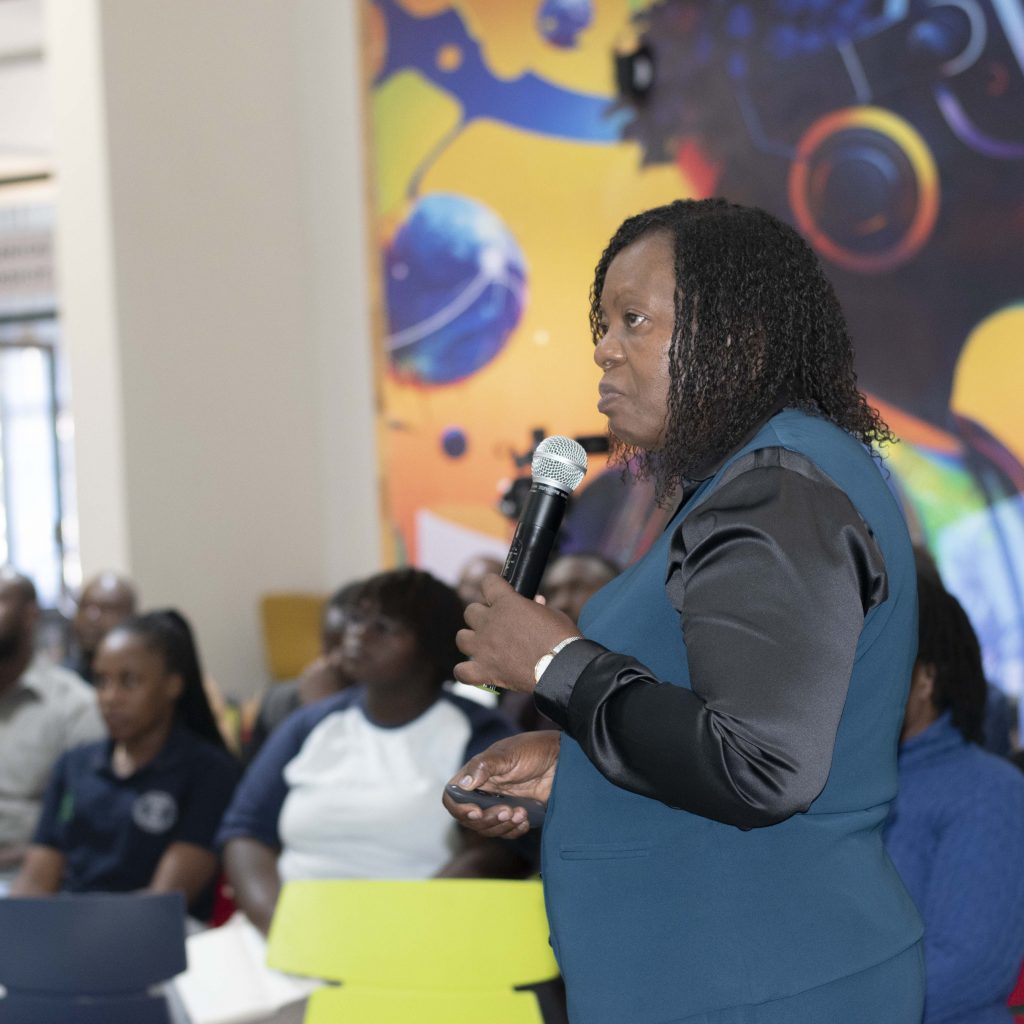
Eng. Prof. Theresa Mkandawire delivering her presentation during the event.
On 26 June 2026, researchers gathered at UNIPOD collaborative space for a seminar that challenged them to rethink how they approach research funding. Rather than viewing grants simply as a source of financial support, participants were encouraged to see them as a pathway to developing solutions that respond to Malawi’s most pressing development needs.
During the seminar, Navigating International Research Funding: Strategies, Experiences and Lessons, the presenter, Eng. Prof. Theresa Mkandawire emphasized that successful research proposals begin with identifying local challenges and aligning them with Malawi’s national development agenda, institutional priorities and the objectives of international funding agencies. She noted that researchers who clearly demonstrate how their work contributes to national priorities are better positioned to compete for international grants.
The presentation highlighted that international research funding plays a critical role in strengthening research capacity, fostering innovation, developing human capital and expanding global partnerships. It also enables universities to generate knowledge and technologies that contribute to Malawi’s socio-economic development while enhancing institutional visibility on the international stage.
Drawing on her own experience, Prof. Mkandawire shared examples of internationally funded projects that have delivered tangible results at MUBAS. She highlighted the NEST360 initiative, which has strengthened engineering education, established innovation spaces, trained students and faculty, and supported the development of locally produced technologies, including face shields and foot-operated handwashing machines during the COVID-19 pandemic.
She also showcased the Africa Sustainable Infrastructure Mobility (ASIM) project, funded by the European Union, as an example of how international partnerships can strengthen higher education. The project has facilitated postgraduate training, staff and student exchanges, collaborative research and increased international engagement among partner universities across Africa and Europe.
Beyond showcasing successful projects, the seminar provided practical guidance on identifying funding opportunities, developing competitive proposals, building strategic research partnerships and effectively managing donor-funded projects. Participants were encouraged to begin building collaborations early, learn from unsuccessful applications and maintain high standards of accountability throughout the grant lifecycle.
The seminar reinforced the message that impactful research begins with local relevance. By aligning research with Malawi’s development priorities while addressing global challenges, researchers can increase their competitiveness for international funding and contribute meaningful solutions that extend beyond the university.